
How Long Should You Wear Dentures?
That question is really two questions — how many hours a day, and how many years before they need replacing. Both have straightforward answers.
Short Answer
Each day: through your waking hours, out at night, so the gums get six to eight hours free of pressure. Overall: most dentures serve five to ten years, with at least one reline along the way, because the jaw underneath keeps changing shape.
Book a Denture CheckEach Day: In for Waking Hours, Out at Night
For most denture wearers the routine is simple. Put them in when you get up, take them out before bed, and let the gums have the night off. That schedule gives the tissue and the bone underneath somewhere in the region of six to eight hours a day without pressure on it, which is what keeps the gums from becoming permanently sore and irritated.
There is one clear exception, and it comes at the start. After extractions or with a brand new set, your dentist may ask you to leave them in continuously for a short break-in stretch, sometimes including sleep, so that swelling is controlled and the tissue heals to the right shape. That instruction is temporary and it is written for your particular mouth, so follow the one you were given rather than the general rule above.
Beyond that, the honest answer to "how many hours" is: as many as you comfortably can while you are awake. Wearing them only for meals or only when guests come over slows down the adjustment, because the muscles of the cheeks and tongue learn to manage a denture through repetition and nothing else.
Why Not Sleep in Them
Sleeping in dentures night after night causes two problems at once. The first is unrelieved pressure: gum tissue that never gets a rest stays inflamed, and the bone beneath it is being compressed twenty-four hours a day instead of sixteen. The second is what grows in the warm, closed, moist space between an appliance and the palate. Denture stomatitis, a yeast irritation that leaves the roof of the mouth red and sore, is markedly more common in people who wear their dentures overnight.
The overnight soak solves both. Out of the mouth, brushed with a soft brush and a non-abrasive cleaner, then stored in water or a denture solution so the acrylic does not dry out and warp. The American Dental Association's patient guidance covers the daily cleaning routine in more detail.
One Thing Never to Do
Do not use hot or boiling water to clean or store a denture, and do not use household bleach or a hard-bristled brush on it. Heat warps the acrylic permanently, and once the base has distorted, the fit is gone and no adjustment brings it back. Cool water and a cleaner made for dentures, every time.
Over the Years: Five to Ten, With Relines Sooner
A well-made denture commonly serves somewhere between five and ten years before it needs replacing outright. But that number hides the more useful fact, which is that the denture is rarely what changes. Your mouth is.
Once natural teeth are gone, the jawbone that used to support them slowly resorbs, because the chewing forces that kept it stimulated are no longer being transmitted through roots. The ridge your denture was molded against in year one is a slightly different shape in year three, and a noticeably different shape in year six. The appliance has not moved. The landscape it was built for has.
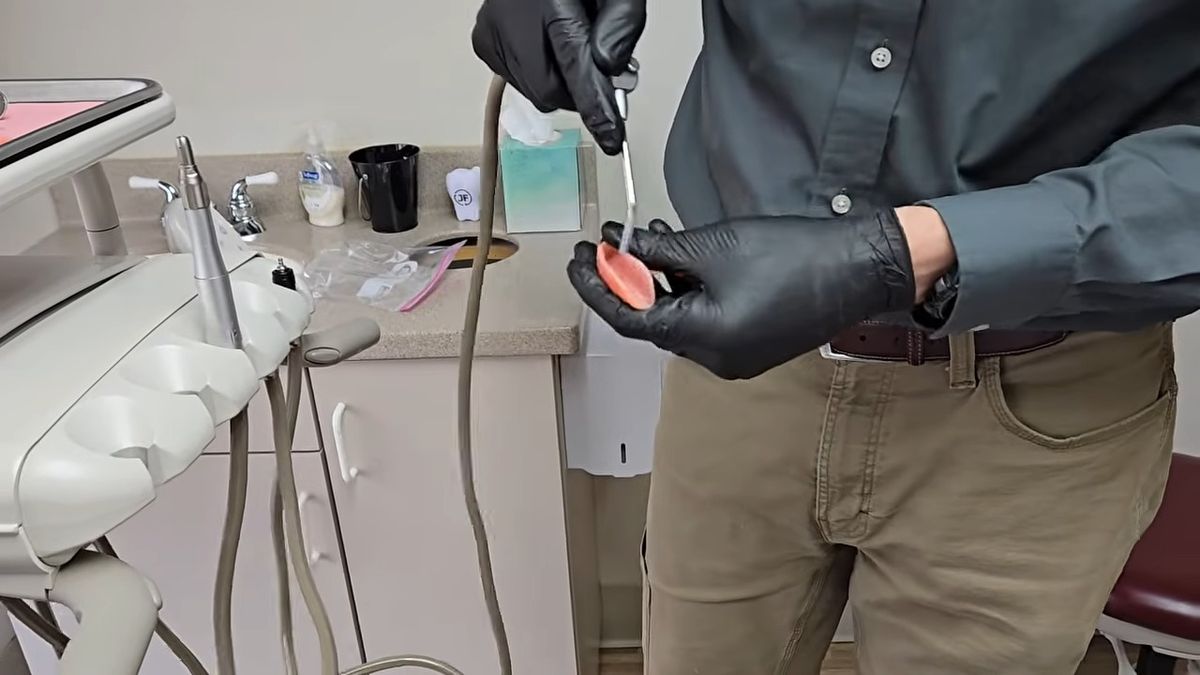
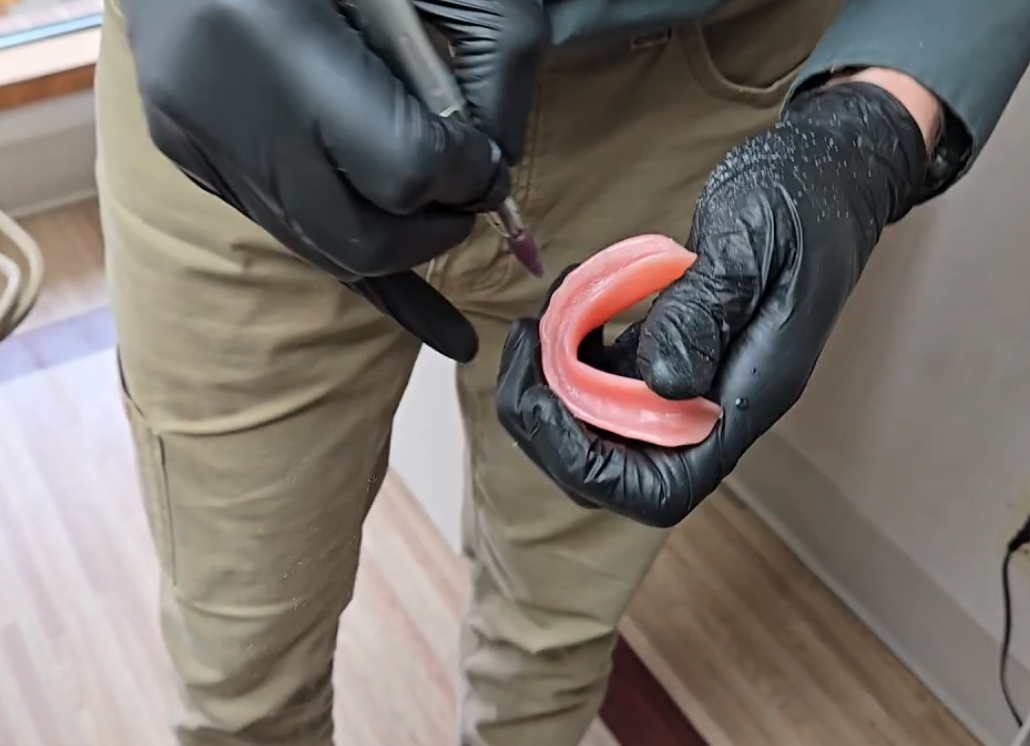
That is why a reline usually comes well before a replacement, sometimes within the first couple of years and periodically after that. It resurfaces the tissue side of the denture you already own to match the ridge as it is now — same teeth, same base, a fraction of the cost of starting over. A full replacement becomes the right call when the acrylic teeth themselves are worn flat, the base has cracked or keeps breaking, or the shape has drifted too far for resurfacing to catch up.
Six Signs Yours Need Looking At
None of these is something to live with, and all six are far cheaper to deal with early. If any sound familiar, call whichever office is closer.
Slipping When You Talk or Laugh
The most common first sign that the ridge has changed shape underneath. It is a fit issue, not a technique issue.
More Adhesive Than You Used To Need
Adhesive is meant to be a small assist, not the thing holding the denture in. Creeping usage is a reline signal.
New Sore Spots
A denture that fit fine for years and now rubs is pressing somewhere it did not before. Usually a short adjustment appointment.
Food Getting Underneath
Food working its way beneath the base after most meals means the seal against the ridge has opened up.
Clicking When You Chew
Movement against the ridge that you can hear. It tends to arrive alongside the slipping.
A Change in Your Profile
Worn-down teeth or a settling denture lets the bite close further than it should, which shortens the lower face over time.
One that is not on the list because it deserves its own line: any sore that has not healed after about two weeks should be examined promptly, whether or not it seems denture-related.
If Yours Are New: What the First Few Weeks Feel Like
Expect a few weeks of adjustment and expect the first two to be the strange ones. Extra saliva, a lisp on words with an S in them, and an odd sense of bulk are all normal and all pass. Three things make the process shorter.
Start Soft and Cut Small
Eggs, soup, fish, cooked vegetables. Work up to firmer food over a couple of weeks rather than testing a steak on day three.
Chew on Both Sides at Once
This is the single most useful habit and the least intuitive. Loading both sides evenly keeps the denture seated; chewing on one side tips it.
Read Aloud for Ten Minutes a Day
Speech comes back through repetition. Ten minutes of reading out loud retrains the tongue faster than waiting for it to sort itself out.
What is not part of normal adjustment is a sharp, localized sore spot. That is a pressure point, it is a quick adjustment, and pushing through it for two weeks only turns a small ulcer into a larger one.
If You Are Tired of Taking Them Out
Implant-retained dentures snap onto implants set in the jaw. The slipping stops, the adhesive tube goes in a drawer, and the implants help preserve the bone that a conventional denture does nothing to hold on to. Some designs still come out at night for cleaning; others stay fixed.
Whether you are a candidate comes down to your bone and your general health, which needs a scan and a conversation. Start on our dental implants page, or ask at your next visit.
Denture Care in Pullman and Lewiston
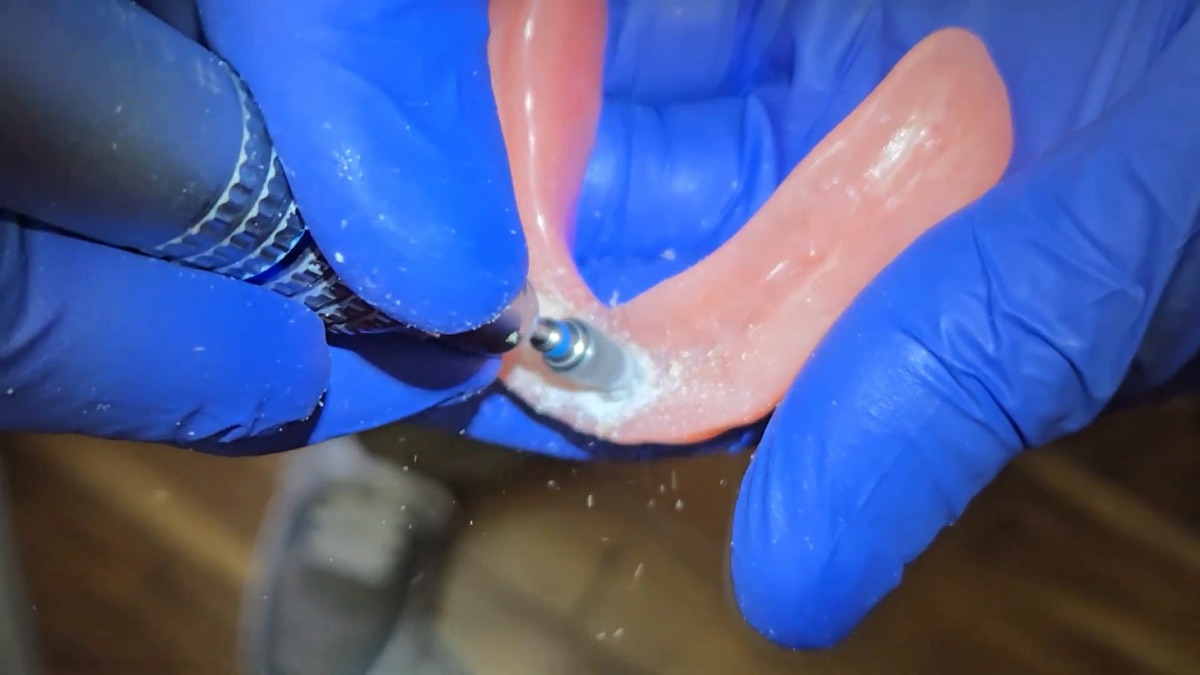
You still need a yearly visit with no natural teeth left. It checks the fit against a ridge that has been quietly changing, examines the gums and soft tissue, and includes an oral cancer screening — which matters exactly as much without teeth as with them. Both offices open at 7:30am on weekdays.


Reviews
What Our Patients Say
Denture Wear, Answered
For most people, through the waking day and out at night. That gives the gums and the bone underneath roughly six to eight hours a day free of pressure, which is what the tissue needs to stay healthy. The exception is the first stretch after new dentures or extractions, when your dentist may ask you to keep them in around the clock for a short break-in period. Follow the instruction you were given, because it was written for your mouth.
As a long-term habit, yes. Wearing dentures overnight keeps constant pressure on the gums and traps warmth and moisture against the tissue, which is associated with sore, inflamed gums and a yeast irritation called denture stomatitis. Taking them out at night and storing them in water or a cleaning solution lets the tissue recover and lets you clean the appliance properly. Short-term overnight wear on your dentist's instruction is a different situation.
A well-made denture commonly lasts somewhere in the range of five to ten years before it needs replacing, and it will usually need at least one reline well before that. The appliance rarely wears out first. What changes is the mouth: once teeth are gone the jawbone gradually resorbs, so the ridge the denture was molded to is not the same ridge a few years later.
A reline resurfaces the tissue side of your existing denture so it matches the shape your ridge has become. You keep the same teeth and the same base, and it costs far less than a replacement. A new denture is needed when the teeth themselves are worn down, the base is cracked or repeatedly breaking, or the fit has drifted too far for resurfacing to solve.
Slipping when you talk or laugh, needing more adhesive than you used to, new sore spots, food working its way underneath, clicking, or a change in how your face looks in profile. Any of those is a fit problem rather than a technique problem, and none of them is something you should have to live with. Persistent sores or any sore that does not heal within a couple of weeks should be looked at promptly.
Expect a few weeks of adjustment, and expect the first two to be the awkward ones. Extra saliva, a lisp on certain words, and a strange sense of bulk are all normal and all fade. Start with soft food cut small, chew on both sides at once rather than one, and read aloud for ten minutes a day to retrain speech. What is not normal is a sharp sore spot, which is a small adjustment appointment, not something to endure.
Yes. An annual visit checks the fit against the ridge that has been changing underneath, examines the gums and the soft tissue, and includes an oral cancer screening, which matters just as much without teeth. It is also how a reline gets caught before the fit turns into sore spots.
Implant-retained dentures snap onto implants placed in the jaw, which stops the slipping and takes the adhesive out of the equation. Some designs are removable and still come out at night for cleaning, others are fixed in place and cleaned differently. Implants also help preserve the bone that a conventional denture does nothing to hold on to. Whether you are a candidate depends on your bone and your health, which is a conversation and a scan, not a yes or no by email.
Slipping, Sore, or Just Older Than You Remember?
Bring them in. We will check the fit against the ridge as it is now and tell you honestly whether you are looking at an adjustment, a reline, or a replacement.
Pullman: (509) 332-2366 · Lewiston: (208) 746-2668
Dentures Should Not Be Something You Put Up With
A reline is a short appointment. Years of slipping and sore spots is a choice nobody needs to make.